Async Coaching
What Is Async Coaching? A Clear Definition
Async coaching is personalized coaching delivered without live calls. The client checks in, receives a session built for them in the coach's method and voice, and works through it on their own schedule. Here is how it works, with examples and evidence.
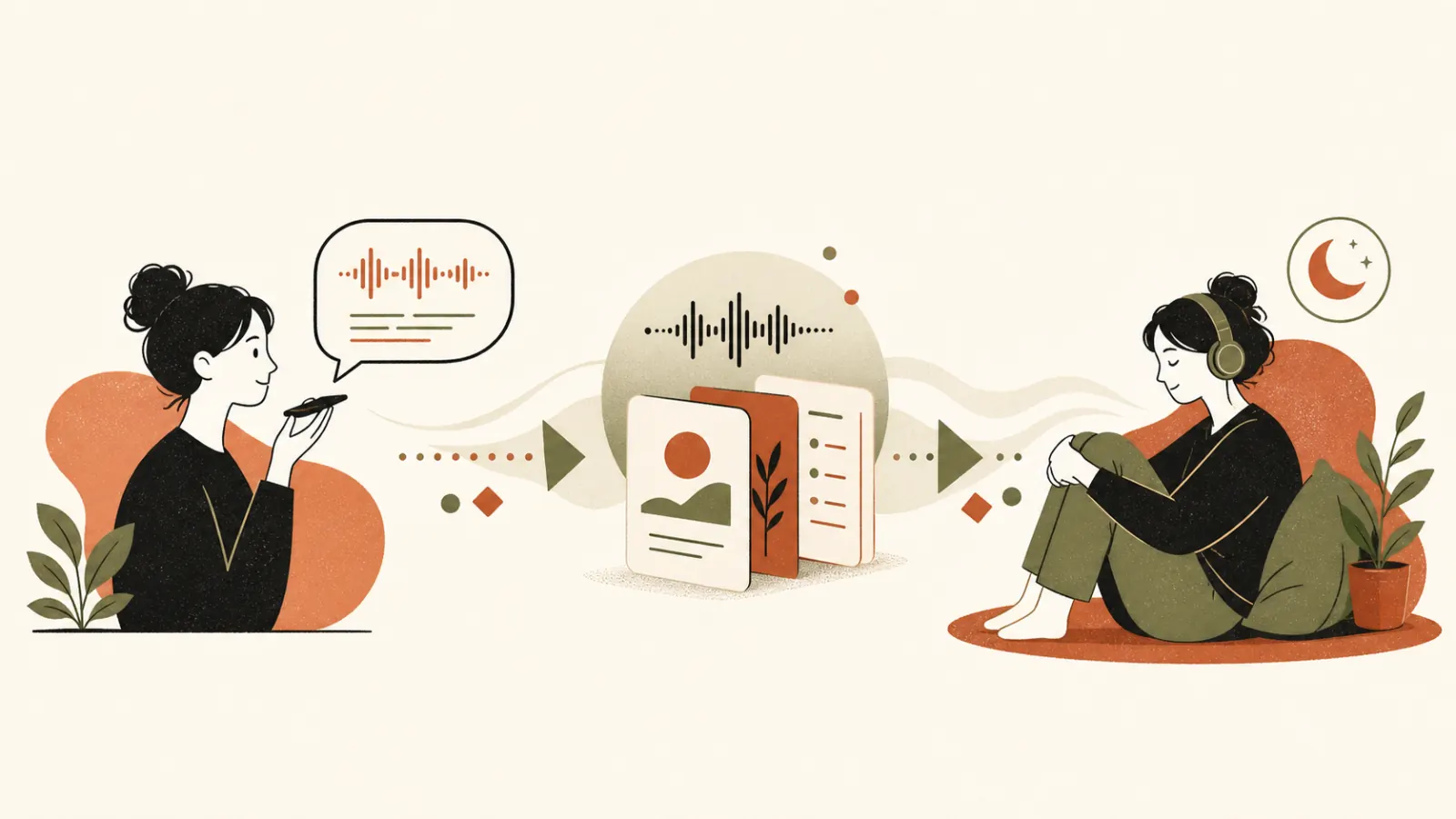
Async coaching is personalized coaching delivered without live calls. The client checks in by text or voice, the coach’s method and voice are used to prepare a session built for that specific person, and the client works through it on their own schedule. The next session unlocks when they check in again.
That is the short answer. The rest of this page explains how it works, shows a concrete example, compares it to the alternatives, and looks at the evidence behind it.
The definition, in one line
Async coaching is a coaching relationship where the personalized work happens asynchronously: the client reflects and checks in, the coach’s method produces a tailored response, and neither side needs to be present at the same time.
The word “async” is borrowed from how modern teams work. Instead of forcing everyone into the same meeting, the work moves forward through thoughtful, time-shifted exchanges. Coaching can work the same way.
How async coaching works in practice
The loop has three moving parts.
First, the client checks in. Before each session they answer a few focused questions, by text or voice, in about two minutes. This captures what a live call would capture in its first ten minutes, without the scheduling or the small talk. The quality of this step matters most, which is why designing the client check-in is the real craft.
Second, a personalized session is prepared. Based on the check-in, the system assembles the next piece of coaching: an audio session in the coach’s voice, a written reflection, an exercise, or a next-step plan. AI can draft and adapt this material, but the coach’s method, tone, and boundaries define it. The human validates what matters. This balance is what human-in-the-loop AI coaching describes.
Third, the client applies it and comes back. They consume the session on their own schedule, do the work, and check in again to unlock the next step. That rhythm, not the live call, is what creates the result.
A concrete example
Say a coach runs an eight-week confidence program.
On Monday, a client records a 90-second voice note: she nailed a presentation but froze when her manager pushed back, and she avoided the follow-up email all week. That is her check-in.
From those signals, the system drafts her next session: a six-minute audio in the coach’s voice that names the specific pattern (acting confidently until challenged), one reframing exercise, and a single concrete task, send the follow-up email by Thursday. The coach skims the draft, tightens one sentence, approves it. Total human time: about three minutes.
The client listens on her commute, does the exercise, sends the email, and checks in again to unlock week four. No call was scheduled. No time zone was negotiated. She still felt personally coached, because she was.
Async vs live coaching vs a course vs a chatbot
These four are often confused. They are not the same thing.
| Personalized to the individual | Scales beyond the coach’s calendar | Built-in accountability | Coach’s judgement in the loop | |
|---|---|---|---|---|
| Live 1:1 coaching | Yes | No | Yes | Yes |
| Online course | No | Yes | Weak | No |
| Generic AI chatbot | Shallow | Yes | No | No |
| Async coaching | Yes | Yes | Yes | Yes |
Live coaching is personal but capped by hours. A course scales but is impersonal and easy to ignore. A chatbot scales but puts the work back on the client and removes the coach. Async coaching is the only one of the four that keeps the human method personal and lets it scale.
Why completion is the real problem async coaching solves
The honest, uncomfortable fact about online education is that most people never finish what they buy. Across large open online courses, completion rates typically sit between 5% and 15%, with one widely cited analysis of hundreds of courses finding a median completion rate of around 12.6% (Jordan, Open University). Most buyers, in other words, never reach the end.
Completion is not a vanity metric. A client who finishes and gets a result trusts you and buys again. A client who stalls quietly blames themselves and hesitates before the next purchase.
Two things move completion: personalization and accountability. Research on personalized learning links stronger implementation to more positive outcomes (RAND Corporation), and studies of student coaching find that an accountability relationship, someone who notices when you disappear, measurably improves persistence and retention. Async coaching is built to deliver both at once.
The first-party results point the same way. The async program behind MyInnerCenter sees close to 100% completion on deep emotional work that people usually abandon, and MySleepExpert, built on CBT-I, targets the kind of remission rates clinical research associates with the method (around 36% versus 17% in control conditions). Same engine, different domains, same completion dynamic.
What async coaching is not
It is not a chatbot bolted onto a course. A box that says “ask me anything” puts the work back on the client, who still has to know what to ask. Async coaching leads.
It is not the coach disappearing into automation. The coach’s judgement stays in the loop. AI handles the repetitive delivery layer; the human keeps the taste and the responsibility.
It is not impersonal. Done well, clients consistently report that it feels more personal than the group calls they came from, because every session responds to their real situation.
Who async coaching is for
It fits coaches, therapists, course creators, authors, and educators who have a real method and more demand than their calendar can serve. If your work depends on live hours, your income is capped by your week and your best energy gets sliced into calendar blocks. Async coaching turns your method into something that keeps delivering when you are not at your desk, without diluting it into generic content.
When it works best
Async coaching is strongest when the method is clear enough to be structured, when reflection genuinely helps the client, and when completion matters more than live face time. If those are true, it is often a better experience for both sides: the coach gains reach and time, the client gains support that fits their actual life.
If you want to see why this shift is happening now, read why information products need async coaching.
Frequently asked questions
Is async coaching just a chatbot? +
No. A chatbot waits for the client to know what to ask. Async coaching leads: it collects a structured check-in, prepares a personalized session in the coach's method, and asks for the next action. The coach's judgement stays in the loop; the AI handles the repetitive delivery, not the thinking.
Does async coaching replace live coaching? +
For many practitioners it can replace most of it, because much of a live call is reporting, reflecting, and assigning the next step, none of which strictly needs real time. Others keep live sessions for sensitive moments and use async for everything between. Both models work.
How is async coaching different from an online course? +
A course is identical for everyone and easy to abandon, which is why most online courses are never finished. Async coaching adapts each step to the individual and asks for a small action before the next step unlocks, so completion and results go up.
Will clients know AI is involved? +
Only if you tell them, and many coaches do. What clients feel is that the session responds to their real situation in the coach's voice. The personalization comes from signals they actually gave, so it reads as attention, not automation.
Who is async coaching best for? +
Coaches, therapists, course creators, authors, and educators who have a real, structured method and more demand than their calendar can serve. It turns a method into something that keeps delivering when the expert is not at their desk.